
Calceolaria: flowers with a surprising shape

Agate presents its current favorite.
Within our collections, numerous illustrations or photographs deserve to be exhibited for their aesthetic quality or originality.Today, an illustration of Calceolaria, introduced by horticulturist Louis Van Houtte in 1843.

Since then, these little flowers, sometimes called "little shoes" or "ladies' purses", have enchanted our gardens with their unusual shape and shimmering colours.
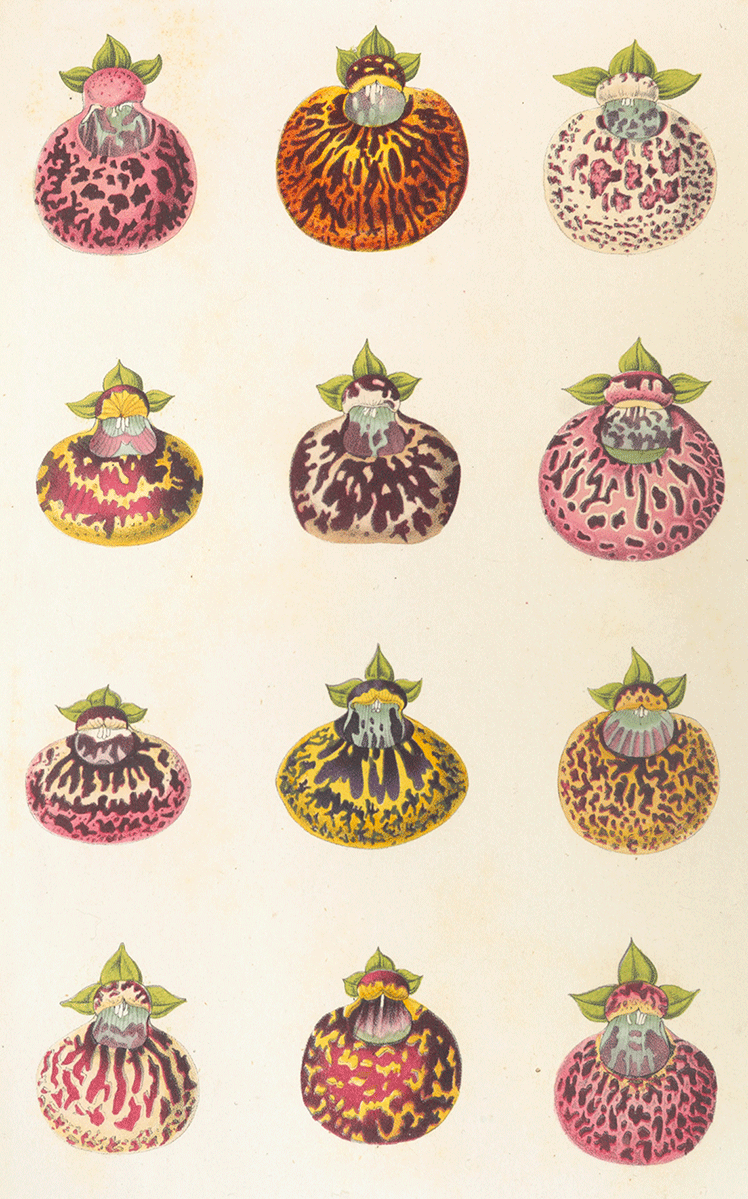
Calceolaria (Van Houtte, M. L. et al., 1847).

Source of illustration : Van Houtte, M. L. et al., (1847). Flore des serres et des jardins de l'Europe (in French), Flora of the Greenhouses and Gardens of Europe, volume III.

This work, published in German, French and English, contains descriptions and figures of the rarest and most deserving plants newly introduced to mainland Europe and England, taken from Botanical magazine, Botanical register and Paxton's magazine of botany. It is enriched with historical, scientific, etymological, synonymic and horticultural notes, etc.
On the same subject

  • Testing of a back-pressure implement carrier at the Central Agricultural Machinery Testing Station in 1923
    Favourite

    Spring is the time to prepare the soil...

    Back in 1923, staff at the Ministry of Agriculture’s Central Agricultural Machinery Testing Station (SEMA) were designing and testing innovative tools, such as this retro-force implement carrier. Designed to carry and operate various implements (plows, seeders, harrows, etc.), it illustrates the ingenuity of the era in making farm work easier.

  • Cows among the rows of cherry trees in a Belgian orchard, 1946
    Favourite

    Cherries and Cows...

    In 1946, cows seem to have found their place among the neatly aligned rows of this Belgian orchard. This photograph, taken from Edmond Van Cauwenberghe’s work Cherries: Standardization and Cultivation, illustrates—long before the term became widespread—the principles of agroforestry: fruit trees for production, and animals to maintain and fertilize the soil. A natural coexistence that, nearly eighty years later, continues to inspire resilient agricultural systems.